In our lab, we highly value being active beyond our scientific work to improve the local or broader academic community, to communicate science to the general public, and to use science to help shape policy. This page lists our activities in these areas. You can also download the flyer for the NYU Community.

Lab culture and expectations

The lab has an open and collaborative culture. We help each other and try to make the lab (and the broader community) better. Weiji tries - not always successfully - to be accessible and to listen well. We talk about problems. We value social life and organize many activities with the lab, including dinners, board game nights, Escape the Rooms, and karaoke. Once a year, we have a lab retreat with a mix of work and fun.

Here is our statement on lab culture and expectations. Before you apply to the lab, we encourage you to check it out.

Weiji's personal story

Weiji is very open about his personal story, including struggles and failures. For example,

One student's account of her life

Peipei, who has side aspirations as a documentary film maker, made a short film about a day in her life in the lab and in New York. Prospective trainees can also get a sense of our lab.

Community

Weiji strongly encourages you to be active in the community, for example through outreach (e.g. Neuroscience Outreach Group at NYU) or policy/advocacy (e.g. Scientist Action and Advocacy Network). See the Community page for more information.

Mentorship in the lab

Direct mentorship

The lab does not have a hierarchical structure: it is easy to talk to Weiji one on one. One-on-one meetings can be devoted to discussing research, professional development (such as career planning), or more personal topics, such as how to stay motivated, insecurities, or what it is all for. If you want, you can schedule a weekly meeting with Weiji, or even twice a week, but walk-ins are also encouraged and Weiji will himself come chat regularly. If you are a PhD student, you will be mentored directly by Weiji, although sometimes in collaboration with a postdoc. If you are a Masters-level or undergraduate student, you will be mentored directly by Weiji, although sometimes in collaboration with a postdoc or PhD student. Mentorship is ideally customized for each lab member, and this requires an open, two-way communication about what works and what doesn't work. For example, would you rather have Weiji set deadlines or set your own? How frequently do you want to meet? Weiji is open to receiving feedback on his mentorship, and will make changes in response to feedback.

If problems arise

If you are a PhD student, you will have a committee of other professors, who will listen to and act upon any concerns or disagreements you might have about Weiji's mentorship; the other important resource is the Director of Graduate Studies.

Lab meetings

Lab meeting is once a week for 1.5 hours. We usually start with a "stand-up round", in which everyone summarizes what they have done in the past week and what they are struggling with. This is also a moment to ask for help. Then, a lab member might present plans or results from their project. We also do writing workshops and presentation practices. Moreover, we regularly discuss academic practices, habits, and feelings; recent topics have included the role of perfectionism, the role of competition, and the role of creativity in academia. From time to time, we also discuss the evolution of scientific ideas within the lab - to get a bigger picture and identify blind spots. Once or twice a week, we have "working together sessions", because we find them motivating.

Professional development

PhD applications

Weiji's lab accepts PhD students from both the Neuroscience Graduate Program and from the Cognition and Perception Program. The former has a rotation system (so you get admitted by the program, not by a PI), the latter does not (so Weiji would have to accept you). The Application Support Group consists of student volunteers who provide one-on-one mentorship to prospective applicants on how to prepare a strong application. Sign up for the 2024-2025 cycle here. NYU's Social Psychology Program has a Youtube channel with many resources on preparing an application. Dongqi Bao (a lab alumna) and a group of Chinese students wrote a Neuroscience/Cognitive Science PhD Application Guide (in Chinese). It includes experiences about early-stage preparation, finding research positions abroad, networking, choosing programs, preparing material and interviews, etc.

Career planning

Weiji encourages PhD students and postdocs to explore career options both inside and outside academia. PhD students in the lab often do an internship in industry at some point during their PhD. Everyone in the lab fills out an Individual Development Plan and discusses it with Weiji.

Conferences

PhD students and postdocs may attend one conference a year (even if they have no work to present). They may attend a second conference if they have work to present and funding allows. Which conferences to attend is a joint decision with Weiji. Conferences that lab members have attended include Cognitive Science Society, Cognitive Computational Neuroscience (CCN), Reinforcement Learning and Decision Making, Computational and Systems Neuroscience (Cosyne), Vision Sciences Society (VSS), Society for Neuroscience (SfN), Society for Neuroeconomics, Psychonomics, and the Society for Mathematical Psychology. PhD students may participate in a summer school at least once during their tenure.

Mentoring others

PhD students and postdocs get mentorship opportunities of their own: you can mentor a Masters student, an undergraduate, a high school student, or if you are a postdoc, a PhD student. The lab has so far mentored four students from high schools in the New York City area.

Grantwriting

Some students and postdocs write their own grant applications, but Weiji usually does not require this, and some grant opportunities are limited to U.S. citizens and permanent residents.

Growing up in Science

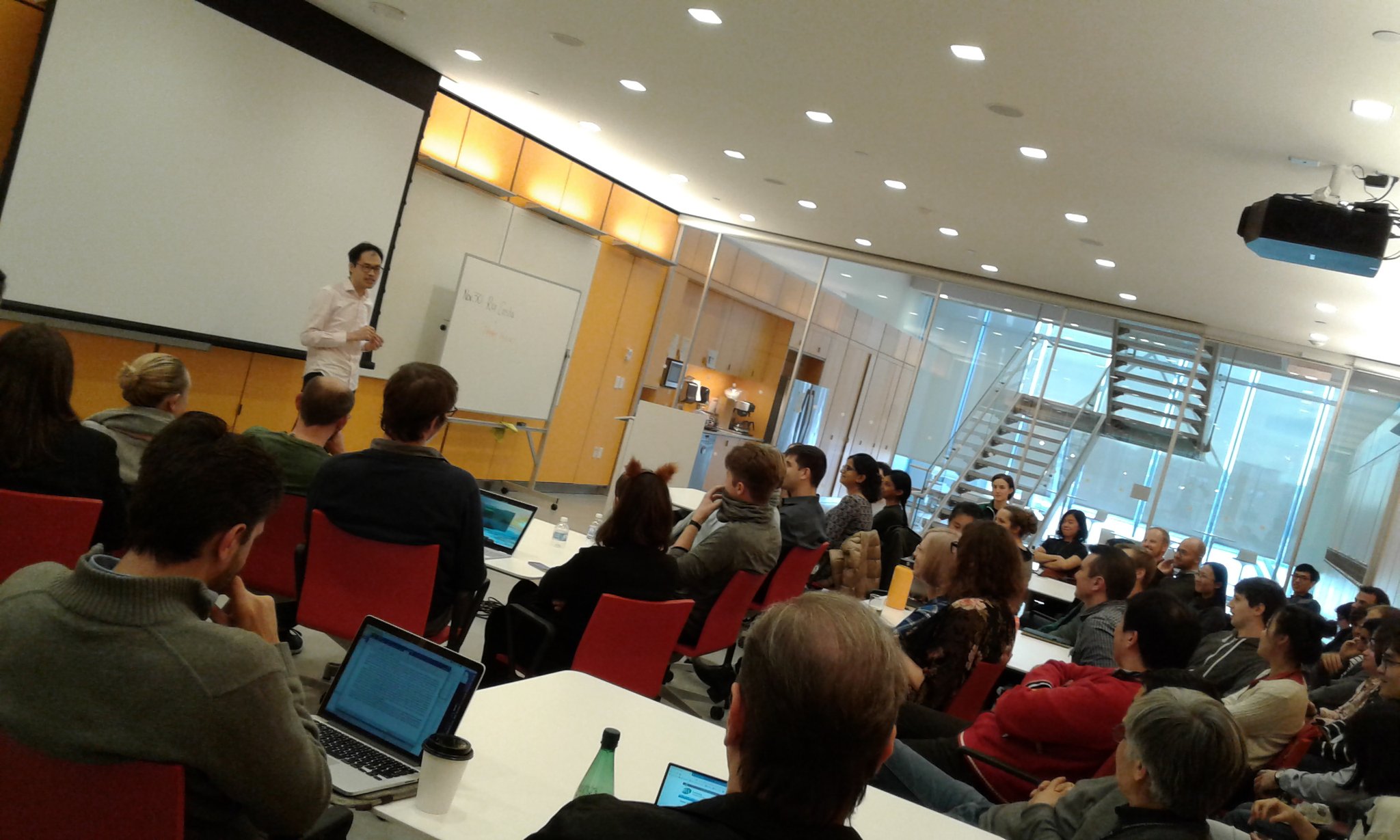
Growing up in Science is a mentorship series co-founded and led by Weiji. In each event, one faculty member shares their life story, with a focus on struggles, failures, doubts, detours, and weaknesses. Common topics include dealing with expectations (your own and others), impostor syndrome, procrastination, the role of luck, rejection, and conflicts with advisors, but these topics are always embedded in the speaker's broader narrative. We also feature speakers who have left academia - e.g. academic editors, data scientists, and even a screenwriter. The series has featured themed events on mentorship, anti-racism, work-life balance, and other topics.

Weiji Ma speaks at the inaugural Growing up in Science event at Columbia University, organized by the Columbia University Postdoctoral Society, on October 26, 2018. Photo credit: Chiara Bertipaglia

Diversity, equity, inclusion, and justice

From 2021 to 2024, Weiji has co-organized the NYU Workshop on Race and Racism in the Sciences. He also runs the mentorship series Growing up in Science, which has featured events dedicated to anti-racism.

ScAAN

The Scientist Action and Advocacy Network (ScAAN) was founded by Will Adler while he was a PhD student in the lab. ScAAN scientists provide pro bono science consultation to social causes, with an emphasis so far on justice reform and environment. ScAAN supports ongoing campaigns of social change organizations by writing knowledge briefs for lay audiences and by visualizing or analyzing data. Besides Will, many lab members and alumni have played a role in ScAAN: Jenn Laura Lee is a founding member and president, Weiji is a founding member and project leader, and Andra and Maija are active members. Weiji and Jenn gave workshops about the ScAAN model at the S|GNS Summit 2018 (Chicago) and at the Science Policy Symposium 2018 (New York). Weiji, with Diane Geng, also received the 2016 NYU Making a difference award for founding the Rural China Education Foundation.

Science advocacy

Most of the lab participated in the March for Science 2017. Will was appointed an Early-Career Policy Ambassador for the Society for Neuroscience and participated in Capitol Hill Day. Will and Weiji participated in Regional Hill Day, meeting with the office of Senator Kirsten Gillibrand.

Science communication

Writing

We consider the clear communication of science and issues surrounding science to the general public an important responsibility of all scientists. Aspen and Andra took the NYU Science communication workshops, Jenn Lee writes for the The Neuroethics Blog (e.g. here), Peipei writes a neuroscience blog (in Chinese), and Weiji has written popular pieces for Natuurwetenschap en Techniek (now defunct) and for Chessbase. In addition, Weiji was a founding member of Neuwrite Downtown, founded by NYU PhD student Alex Berardino, which brings together scientists and writers to workshop drafts of articles written for general audiences. Its parent organization, Neuwrite, operates in many universities worldwide.

Classroom visits and other outreach

The Neuroscience Outreach Group at NYU and the Greater NYC chapter of the Society for Neuroscience, braiNY, bring science to general audiences through presentations at K-12 schools, science fairs, and other events. Many lab members - including Bas, Will, Andra, Aspen, and Weiji - have been active in these organizations, or have given guest lectures at schools on their own. Weiji has also given science communication workshops inspired by a training given by the Alan Alda Center.

Lab member Luisa Leonelli founded the High School Tutoring Program run by the Society for Undergraduate Neural Science at NYU. In this program, current NYU students volunteer to help current high school students on STEM subjects.

Weiji was the expert interviewed in the video "Illusions for a better society" by Aaron Duffy, Lake Buckley, and Jack Foster, shown at the TED conference in Seatlle in 2018:

Improving teaching

Weiji is Director of Undergraduate Studies in NYU's Department of Psychology (except in the year 2021-2022) and has made teaching innovation a priority:
  • He started a Student Advisory Council to receive regular direct feedback from students on all aspects of their education;
  • he piloted Teaching Squares in the department;
  • he started an annual Teaching Symposium (recording from 2021; NYU login required);
  • he made teaching observations by Teaching and Learning professionals mandatory for tenure and promotion in the department.
In his own teaching, he has experimented with gradeless teaching.

Other

Weiji, with Diane Geng, received the 2016 NYU Making a difference award for their work with the Rural China Education Foundation. Weiji was a neuroscience consultant on The Brain Piece (2017), an interactive modern dance performance by Jody Oberfelder inspired by the brain. With Oberfelder, he also was part of a performative lecture (2016) in the Merchant House in Amsterdam, and hosted a conversation between dance and neuroscience at NYU (2017). Weiji was also a scientific consultant on Anatola Araba’s short film “Afro Algorithms” (2022). Lab alumna Zhiwei Li has participated in the Dance your PhD contest (2017).

Archive of lab pictures


June 6, 2024. At farewell lunch for Peipei. Missing: Daisy Lin.
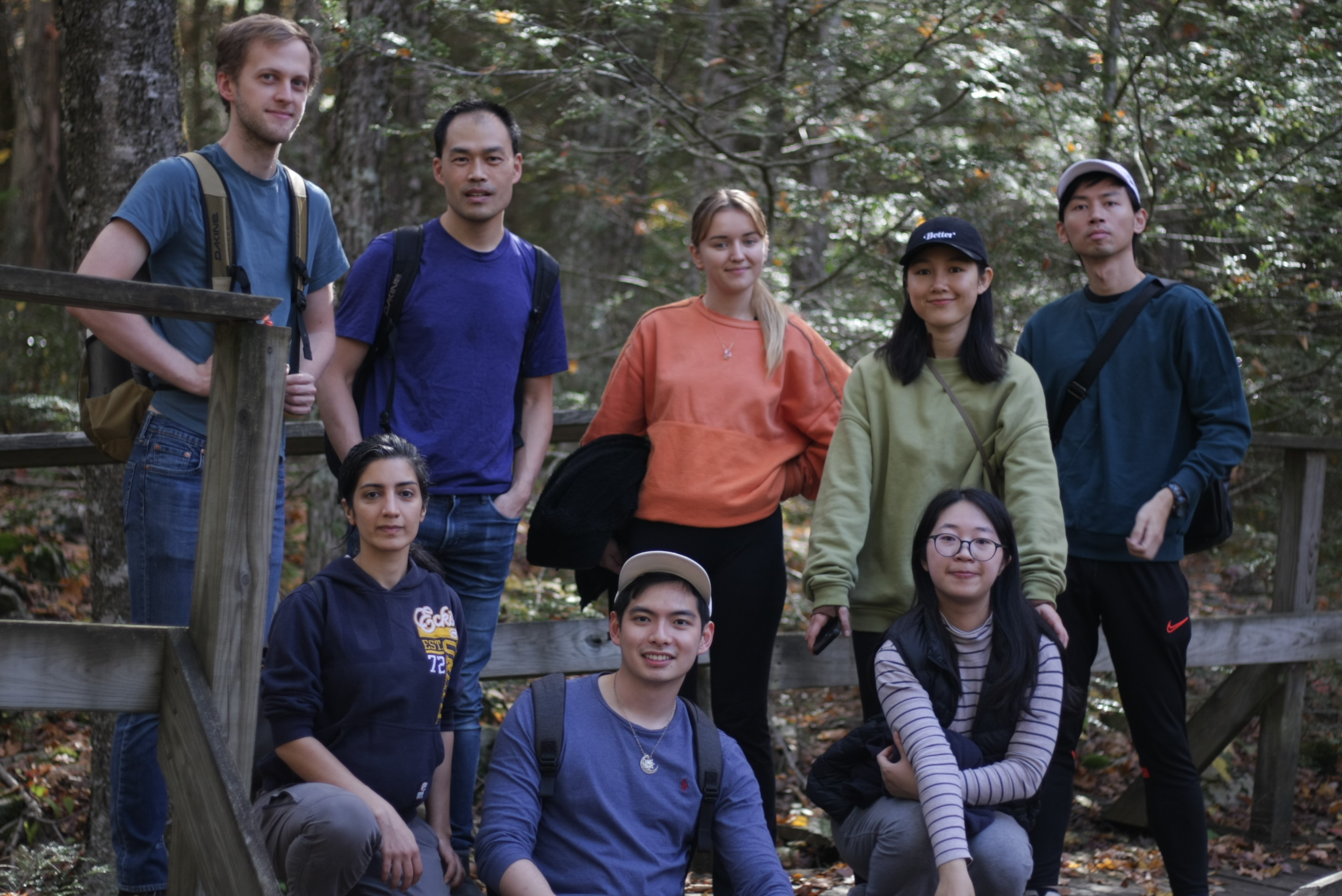
October 22, 2022. Lab retreat in Swan Lake, NY.
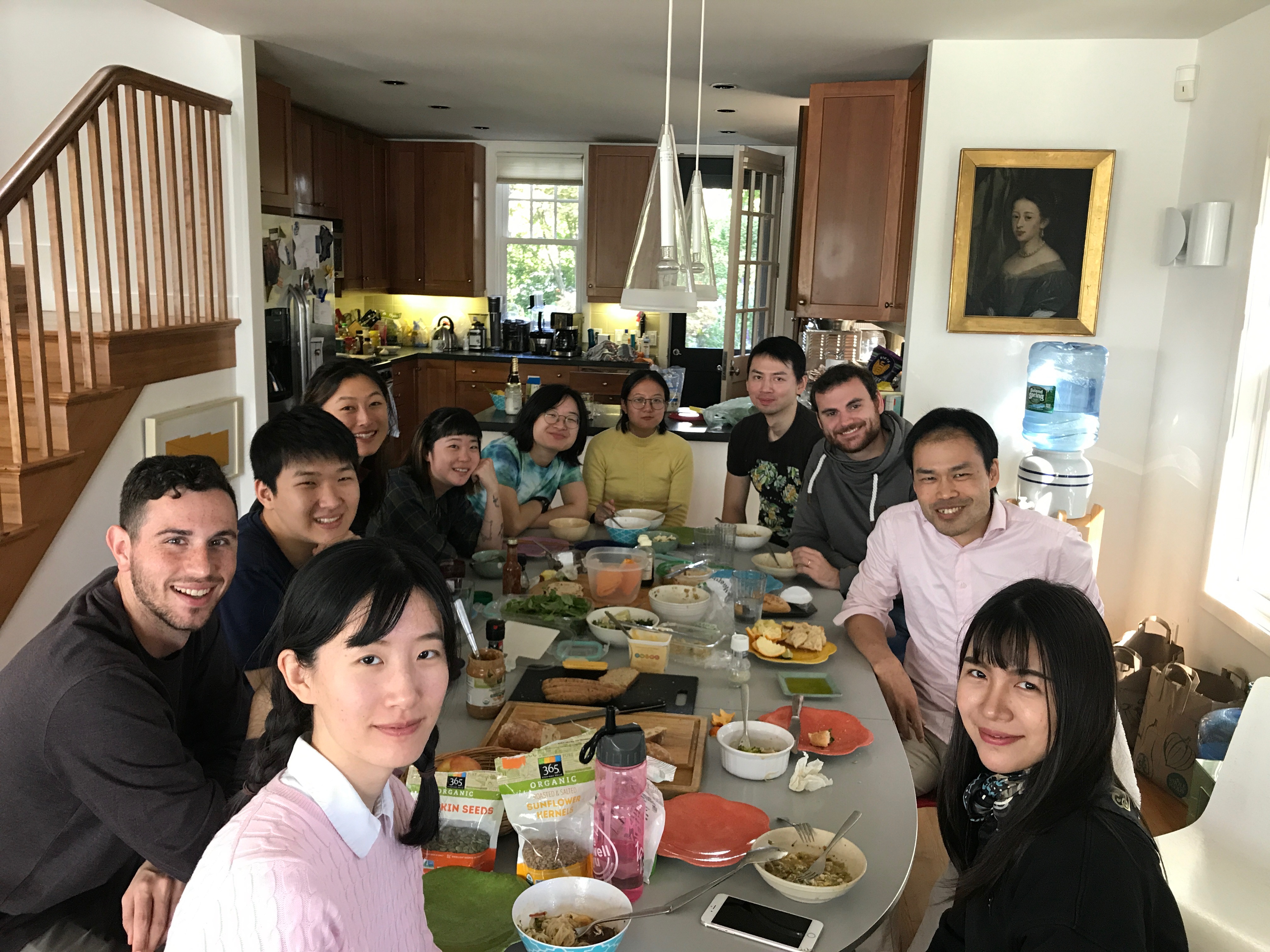
October 13, 2019. Lab retreat in Shelter Island, NY.
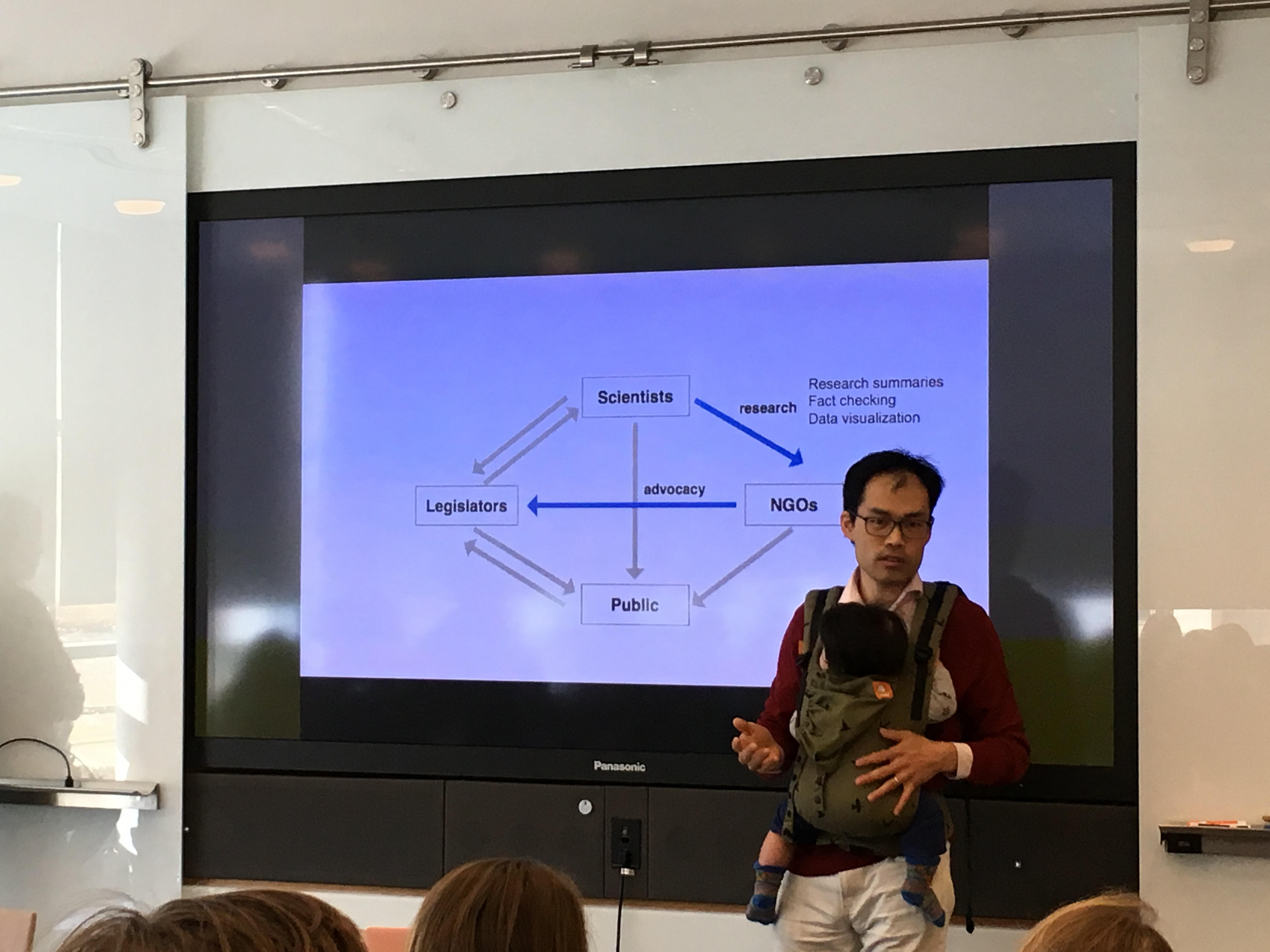
Wei Ji Ma (with baby) and Jenn Lee spoke about the Scientist Action and Advocacy Network at the Science Policy Symposium on November 10, 2018. Photo credit: Vanessa Sung.
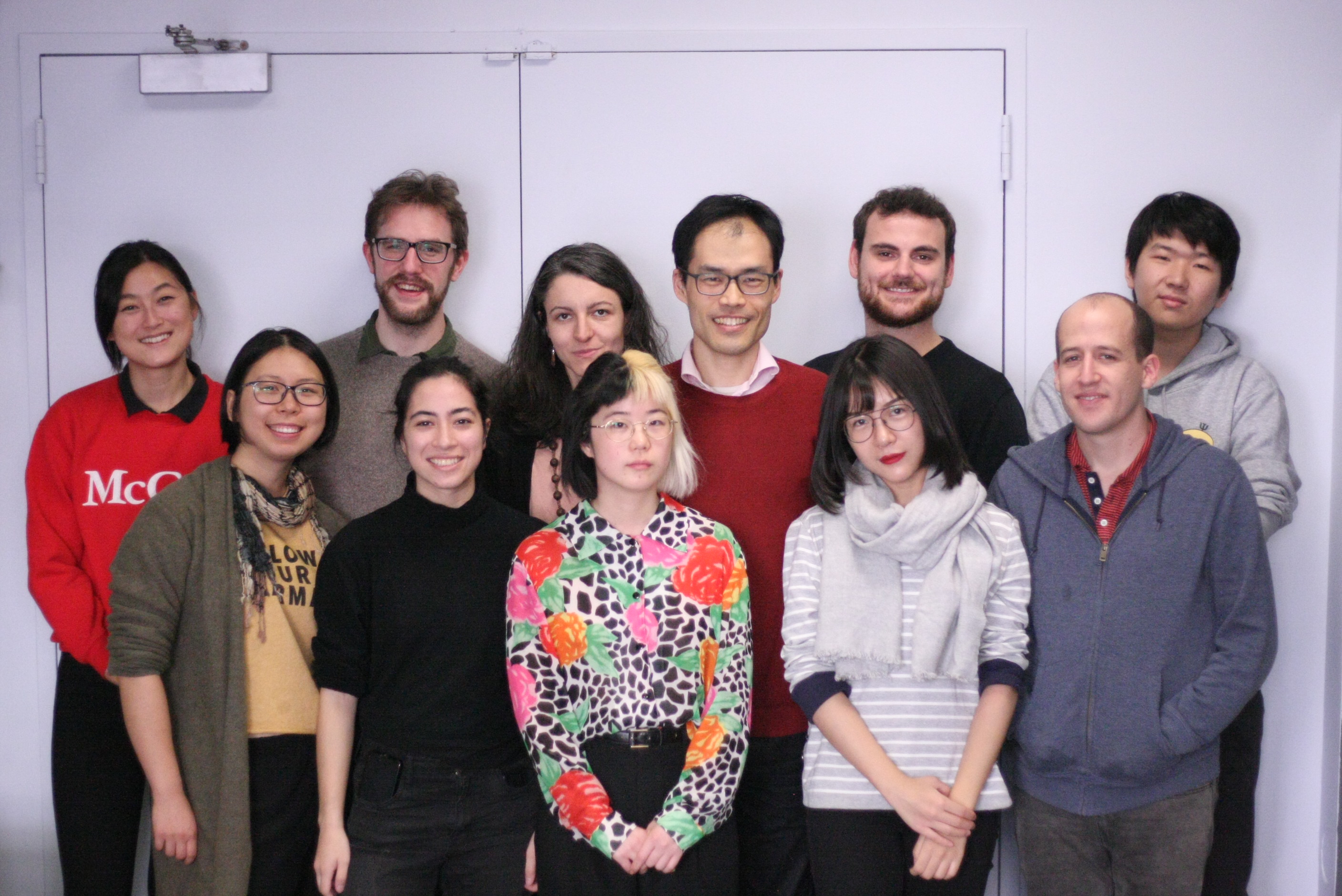
October 29, 2018. After the defense of Bas van Opheusden.

October 26, 2018. Wei Ji speaks in the first Growing up in science event at the Zuckerman Institute at Columbia University.